I’ve been cooking Italian-Australian food at home for almost two decades now, and the single biggest unlock — bigger than learning to handle dough, bigger than spending money on a good pan — was figuring out which dozen ingredients to keep in the cupboard at all times. Once they’re in, the gap between “we’re ordering pizza” and “I’ll have something on the table in twenty minutes” pretty much disappears.
This is the pantry I actually run, in my actual Aussie kitchen, sourced from Coles, Harris Farm, and the occasional dash to Norton Street Grocer in Sydney when I want the proper stuff. I’ve put rough prices next to each item so you know what you’re walking into, and where I think the supermarket version is fine I’ve said so. Where I think you’re getting ripped off, I’ve said that too.
Table of Contents
ToggleThe non-negotiables — start here if you’re starting from scratch
1. Dried pasta — buy the bronze-die stuff, even from Coles
The single biggest jump in quality I ever made was switching from supermarket house-brand pasta to a bronze-die-extruded brand. The bronze die scores the surface of the dough as it’s pushed through, which leaves microscopic ridges that grip sauce. Smooth, Teflon-extruded pasta sheds sauce; bronze-die holds it.
Coles now stocks De Cecco, Rummo, and Garofalo — all bronze-die, all under $6 for 500 g, all genuinely good. I keep three shapes on hand at all times: a long pasta (spaghetti or linguine), a short ridged pasta (rigatoni or penne rigate), and a small shape (orecchiette or gnocchetti sardi) for chunkier sauces. Three shapes is enough. The “twelve different shapes” thing is for restaurants.
You’ll see the bronze-die stuff working in my orecchiette with garlic and olive oil and spaghetti and meatballs — both four-ingredient sauces that only work because the pasta itself is doing half the job.
2. Tinned tomatoes — San Marzano if you can, Coles Brand if you can’t
Italian tomato sauce starts with the tomato, and the tomato is doing about 80% of the work. The proper move is real San Marzano DOP tomatoes — they’re grown in volcanic soil south of Naples and they have a sweetness and acidity that any other tinned tomato struggles to match. Harris Farm carries them in 400 g tins for around $4.50 each. Cento is the brand I reach for; Mutti’s San Marzanos are also legit.
If you can’t justify the spend on a weeknight, the Coles Italian Brand peeled whole tomatoes in the 400 g tin are genuinely fine — about $1.40, less acidic than the cheaper supermarket house-brand, and they break down into a proper sauce. What you want to avoid is anything labelled “diced” or “crushed” — they’re packed with citric acid for shelf life and they taste sharp no matter what you do to them. Whole peeled, then break with a wooden spoon in the pan.
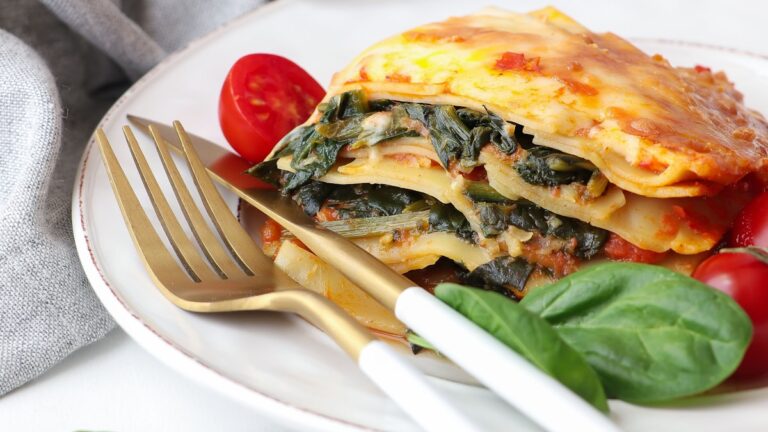
This is the tomato base I use in my slow lamb ragù and the marinara that goes under the lasagna — same tin, two completely different dishes once you change what you put with it.
3. Real Parmigiano Reggiano — and the rind
Bagged “parmesan” from the dairy aisle is mostly cellulose. Real Parmigiano Reggiano has the words “Parmigiano Reggiano” pin-dotted into the rind in tiny letters and a DOP stamp on the wedge — that’s how you know it’s the real thing. A 200 g wedge from Harris Farm runs around $14, and it lasts me about three weeks if I’m careful. Coles also stocks it in their deli — same product, slightly cheaper because the wedges are smaller.
The rind is the secret weapon. Don’t throw it out. Wrap it in baking paper and freeze it. Next time you make a soup, a ragù, or a brodo, drop the rind in and pull it out at the end. It melts a little, throws an umami punch into the liquid, and gives the dish a depth you can’t fake.
4. Extra-virgin olive oil — two bottles, not one
The mistake I see most often in Aussie kitchens is keeping one bottle of EVOO and using it for everything. Heat ruins the flavour compounds in a good oil, so you end up either burning your expensive oil or finishing with a flavourless one.
The fix is two bottles. A working bottle — Cobram Estate Classic or Coles Brand “Australian Extra Virgin” — for cooking, around $9 for 500 ml. And a finishing bottle — something single-estate, Cobram’s Hojiblanca or Pukara Estate from the Hunter, around $25 for 250 ml — that never sees a hot pan. You drizzle the finishing oil on the plate at the end. It’s the difference between a dish that tastes “okay” and one that tastes finished.
According to the Australian Dietary Guidelines, EVOO is one of the few oils explicitly recommended for daily use, so the spend is also doing something for you nutritionally. The polyphenols (the compounds responsible for the slight peppery catch at the back of your throat) are also the antioxidant compounds — if the oil doesn’t bite back a bit, it’s been sitting around too long.
5. Sea salt flakes + fine salt — and use them differently
Fine salt for your pasta water (and you need a lot — the water should taste like the sea, not the suburb). Flake salt for finishing. Murray River pink flakes are an Aussie standout and you’ll find them at Harris Farm for around $7. Maldon is also fine. The crunch of flake salt on a plate of cavatelli alla Genovese or a slice of Pastiera Napoletana at the end is half the experience.
6. Garlic, fresh — never the jarred stuff
Sorry. I know it’s easier. But pre-minced garlic in a jar is in vinegar or citric acid to stop it spoiling and the moment it hits a pan it tastes sharp and metallic. Whole Aussie-grown bulbs from Coles cost about $2 a bulb, they keep for weeks in a paper bag, and you’ll use a bulb a week if you’re cooking pasta regularly. Smash with the flat of a knife, slip the skin off, slice or crush. Done.
The second tier — add these once the basics are dialled in
7. ‘Nduja or fresh Italian sausage
One of these in the fridge changes what a Tuesday-night dinner looks like. ‘Nduja is the spreadable, chilli-loaded Calabrian salami — Harris Farm carries it; about $9 for 200 g. Half a tablespoon stirred into a pan of softened onion gives you a sauce base for pasta alla boscaiola in about fifteen minutes. Fresh Italian sausage from the deli does similar work — squeeze it out of the casing into the pan, break it up with the back of a spoon, and you have ragù in twenty.
8. Anchovies in oil — yes, really
Two tinned anchovies melted into hot oil at the start of a sauce don’t taste like fish at all — they taste like salt and savoury depth. Ortiz in the yellow tin is the gold standard (around $14) and you’ll find it at Harris Farm. The Coles Brand Spanish anchovies are fine for everyday use at about $4. Once you start using them you’ll stop being able to taste sauces that don’t have them.
9. Dried chilli flakes — Calabrian, ideally
Generic chilli flakes are mostly heat with no aroma. Calabrian dried peperoncino has fruit and smoke as well. I find it at Norton Street and online from Pino’s Dolce Vita for around $8. A pinch in the oil at the start of orecchiette with garlic, chilli and wild greens is the entire dish.
10. Wild greens — silverbeet or rapini from Harris Farm
The classic Italian “cucina povera” pasta is greens, garlic, chilli, oil. Silverbeet is the Aussie stand-in for cime di rapa (rapini, broccoli rabe) and Harris Farm carries proper rapini when it’s in season. Either works. Blanch the leaves, save the cooking water, finish the pasta in the green water. The dish writes itself.
What I don’t bother with
- Pre-grated parmesan. Mostly cellulose, no flavour. Grate from the wedge.
- “Italian seasoning” blends. You’re paying for old, oxidised dried herbs in a single jar. Buy dried oregano on its own ($2 from Coles) and fresh basil when you need it.
- Truffle oil. 99% of it is synthetic 2,4-dithiapentane. If you want truffle, buy a real one from Australian Truffle Traders in winter, or skip it. The four-cheese ravioli with truffle on this site is the only place I use it, and only with the real thing.
- Balsamic glaze in a squeeze bottle. It’s basically caramel syrup. Reduce a splash of real balsamic in a saucepan — three minutes, no extra ingredients.
The order to build it
If you’re starting from a bare cupboard, here’s the order I’d buy in. The first shop is about $45 and unlocks roughly half the recipes on this site. The second is another $35 a fortnight later, and pretty much closes the gap. After that you’re topping up — a tin here, a wedge of parmesan there.
- First shop (~$45): 500 g bronze-die spaghetti, 500 g rigatoni, 2 × 400 g whole peeled tomatoes, 200 g Parmigiano Reggiano wedge, 500 ml working EVOO, a bulb of garlic, a packet of sea salt flakes.
- Second shop (~$35): 500 g orecchiette, 200 g ‘nduja, a tin of anchovies, dried Calabrian chilli, a bunch of silverbeet, fresh basil.
- Third shop (~$25, optional): 250 ml finishing oil, a small bottle of real balsamic, dried oregano, a small jar of capers in salt.
From here you can make every pasta on the site. Gnocchi alla Sorrentina needs the gnocchi (Coles or fresh from Harris Farm). Red lentil pasta is for the gluten-free nights. Creamy pesto gnocchi swaps the tomato for basil and pine nuts. Pasta alla Genovese is the long-cooked onion-and-beef sauce that doesn’t actually have basil pesto in it (despite the name).
One more thing — water
The pasta cooking water is the unsung hero. It’s salted, it’s starchy, and the starch is what binds a sauce to the pasta when you toss it. Always — always — scoop a small mug of pasta water out before you drain. A splash into the pan at the end emulsifies the sauce and the oil into something that coats every piece. If your sauce looks watery on the plate, you didn’t add pasta water. If it looks oily and separated, also pasta water. The CSIRO has a good plain-English summary of why starch behaves this way if you like the science, but you don’t need to know the why — just don’t tip it all down the sink.
That’s the whole pantry. Twelve ingredients, three shops, and ninety percent of the Italian cooking on this site. Get the basics right, finish well, save the water. The rest is just practice.
— Jess